
Applications:
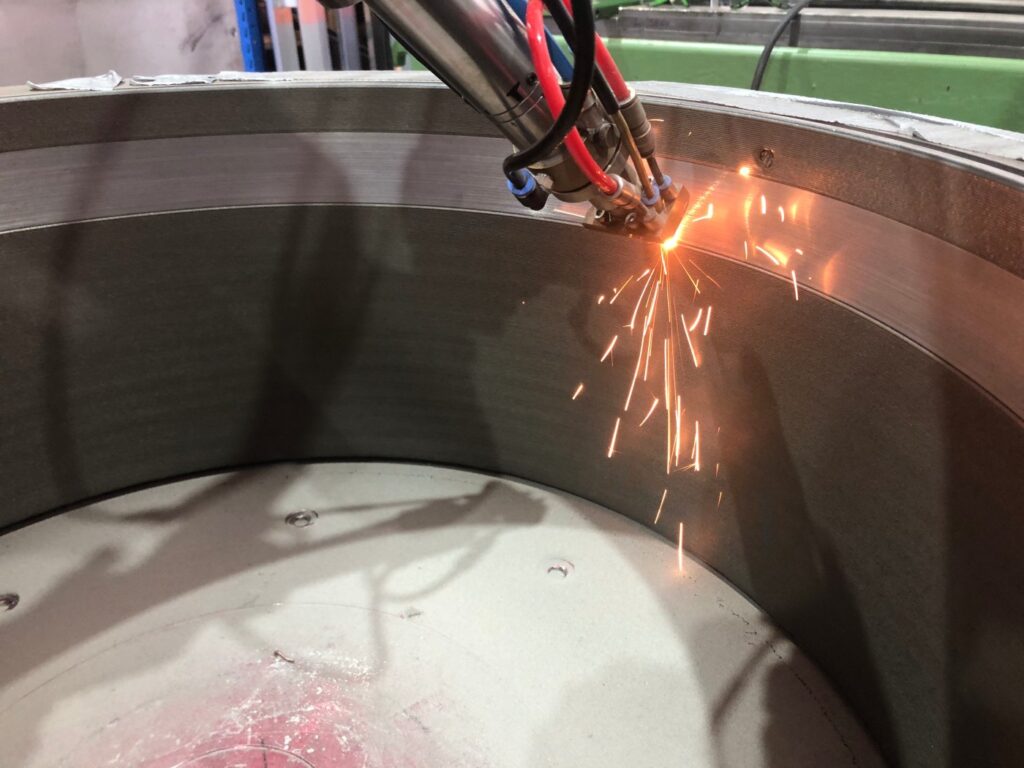
Laser deposition welding
for cast housings, shafts & more
Repair, wear protection and reconditioning of metallic components using laser cladding
Industry
Mechanical engineering
Energy
Marine
Chemistry
Rail
Precise repairs for a wide range of industrial applications
Whether in motors, generators, pumps or turbines: wherever components fail due to high loads, the Laser deposition welding an economical alternative to new production.
Targeted material application with minimal heat input means that even complex geometries can be repaired with dimensional accuracy and without distortion.
The process is suitable for all common materials - from steel and cast iron to nickel alloys. This means that your system is quickly ready for use again instead of having to wait for spare parts.
Typical fields of application for repairs
From the energy and chemical industries to the paper and process industries, laser metal deposition is used for repairs across all sectors.
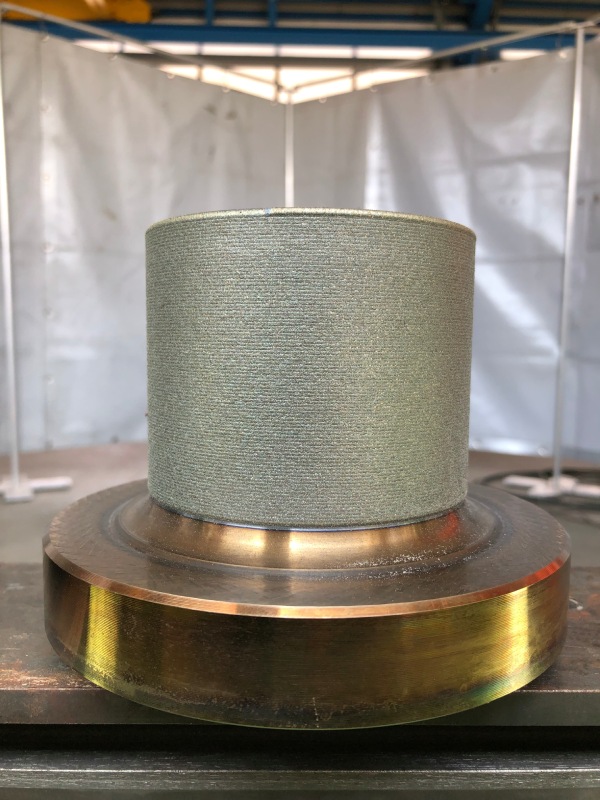
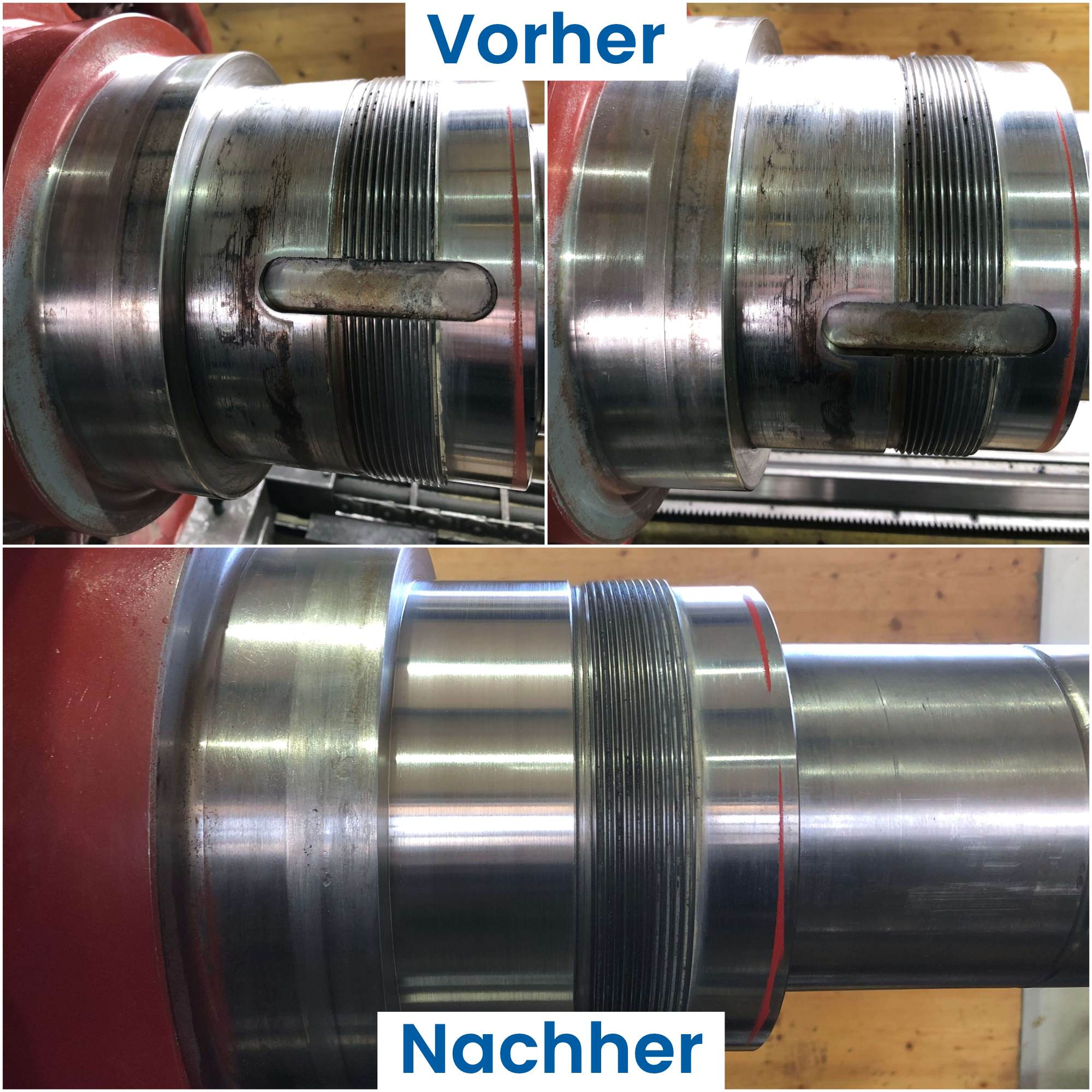
Shafts
- Bearing and sealing surfaces, coupling seats, drive shafts, bearing journals, fits
- Repair without distortion, increased wear protection
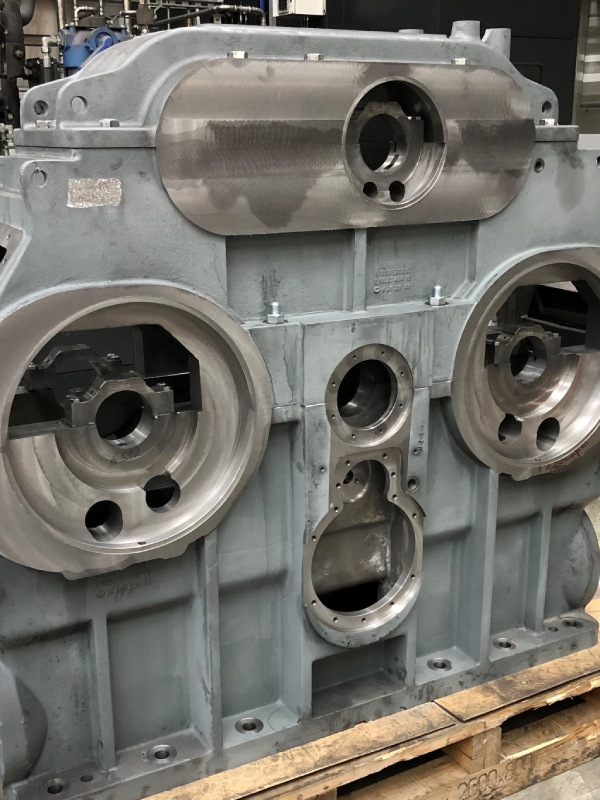
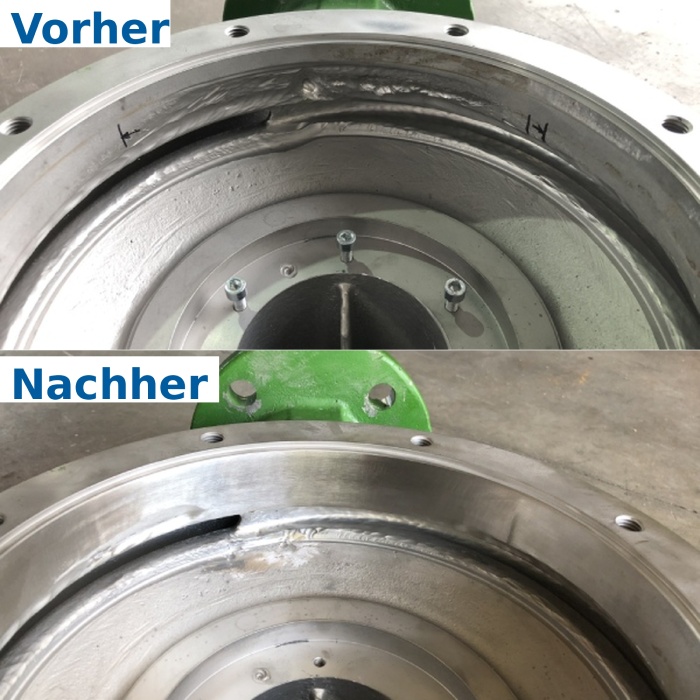
Cast housing
- Steel and grey cast iron (GJS)
- High-quality reconditioning of damaged surfaces
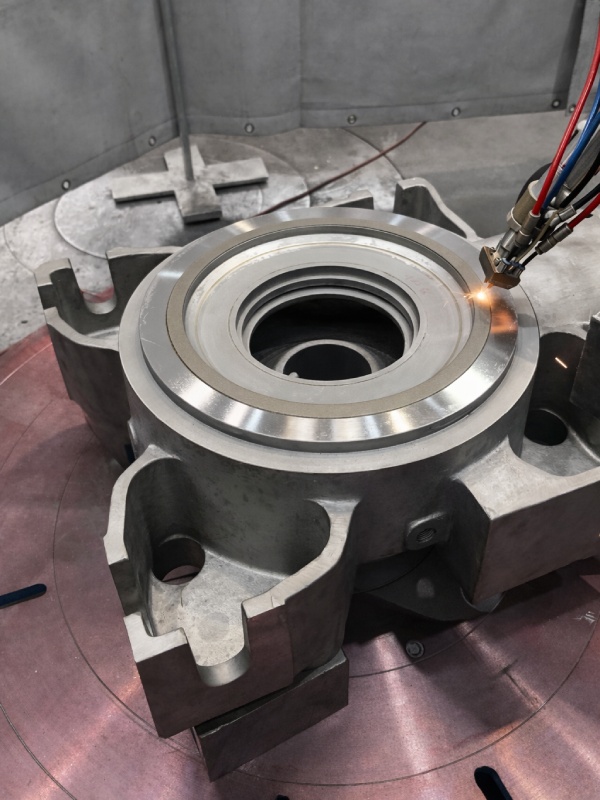
Pumps
- Impellers, sealing surfaces, shaft ends, etc.
- Targeted prevention of cavitation, corrosion and erosion
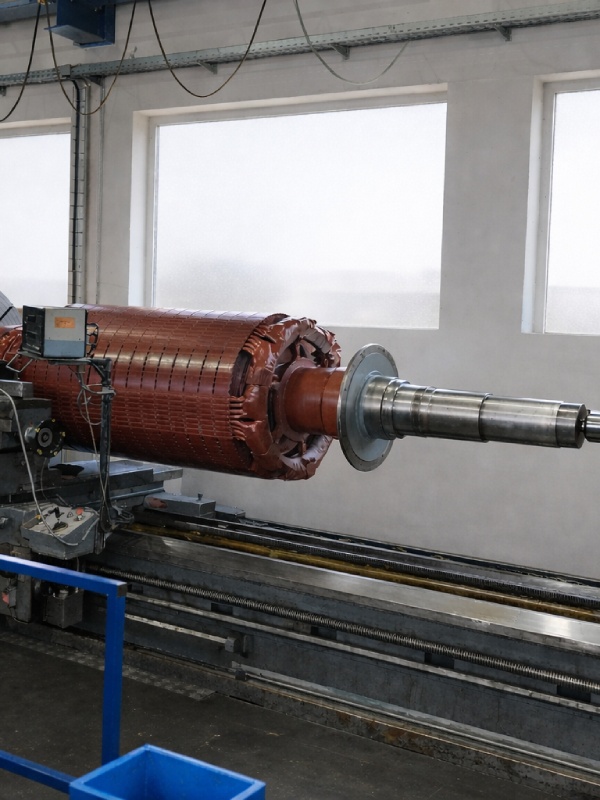
Turbines & Generators
- Bearing seats, coupling points, housing parts, etc.
- High dimensional accuracy and corrosion resistance
Why laser metal deposition is worthwhile
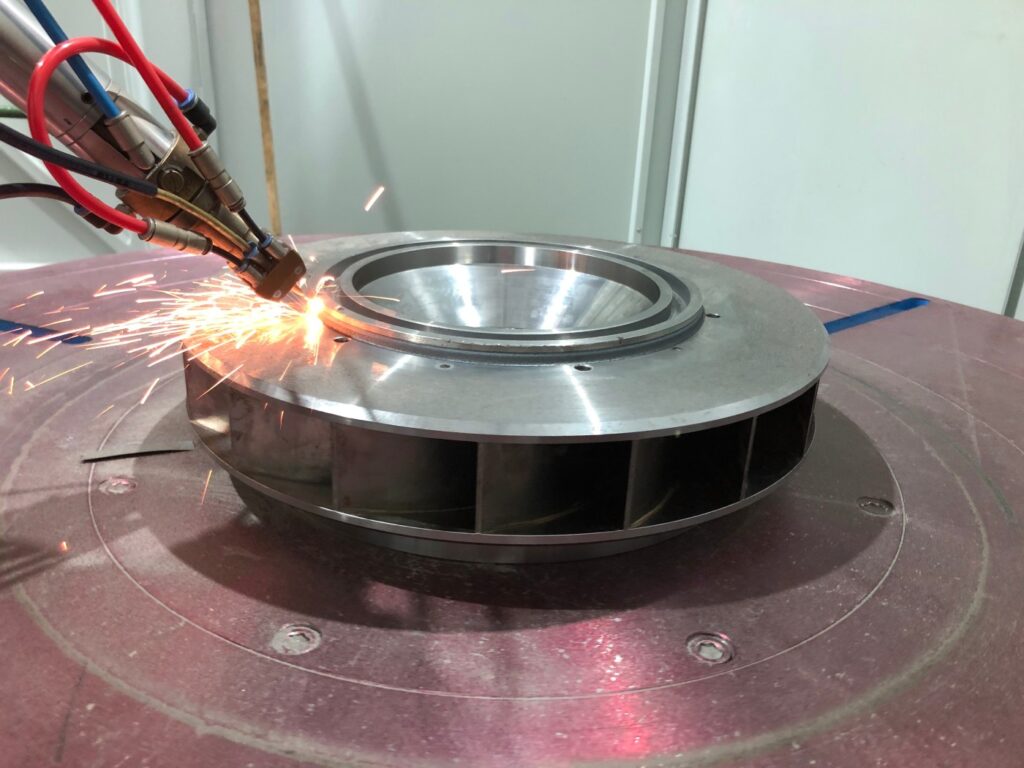
Dimensionally accurate and distortion-free repairs
Highest coating quality and adhesion, NO flaking
Shorter downtimes due to maintenance
Sustainable alternative to new production
Suitable for a wide range of metals and component sizes
Industries that rely on laser cladding
Laser metal deposition is a proven and decisive success factor in the maintenance strategy of numerous industries:
Mechanical and plant engineering:
Repair and coating of shafts and housings
Energy and power plant industry:
Turbines, generators, pump components
paper industry:
Reconditioning of rollers, cutting tools and drive elements
Chemicals and process industry:
Valves, housings, fittings
Rail vehicle technology:
Bearing and drive units
Marine and offshore:
Drive components at risk of corrosion
LaserCladding is used all over the world. From the paper industry to the energy sector, we support companies in a wide range of industries.
Laser metal deposition in the paper industry
In the pulp and paper industry, rollers and drive elements are subjected to high levels of stress due to moisture, abrasion and chemical influences.
Laser deposition welding enables the precise restoration of worn rollers, cutting and guide tools with optimum surface hardness and high corrosion resistance.
Machine downtime? Contact our emergency service now!
Whether it's a planned shutdown or an acute failure, our emergency repair welding service allows us to respond quickly and reliably. We quickly check your component, advise on the optimum repair method and prepare a quotation.
Laser cladding for shafts & bearings
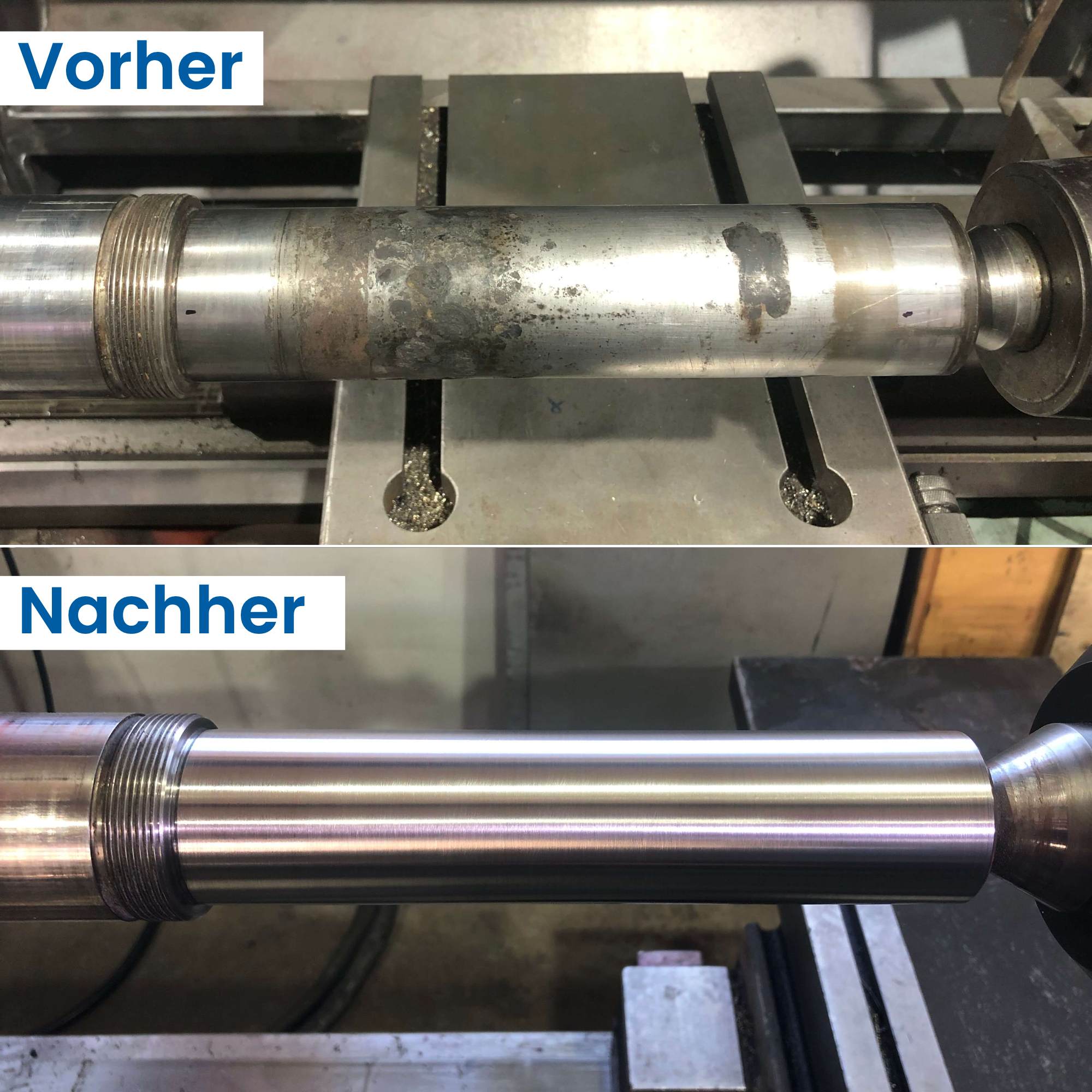
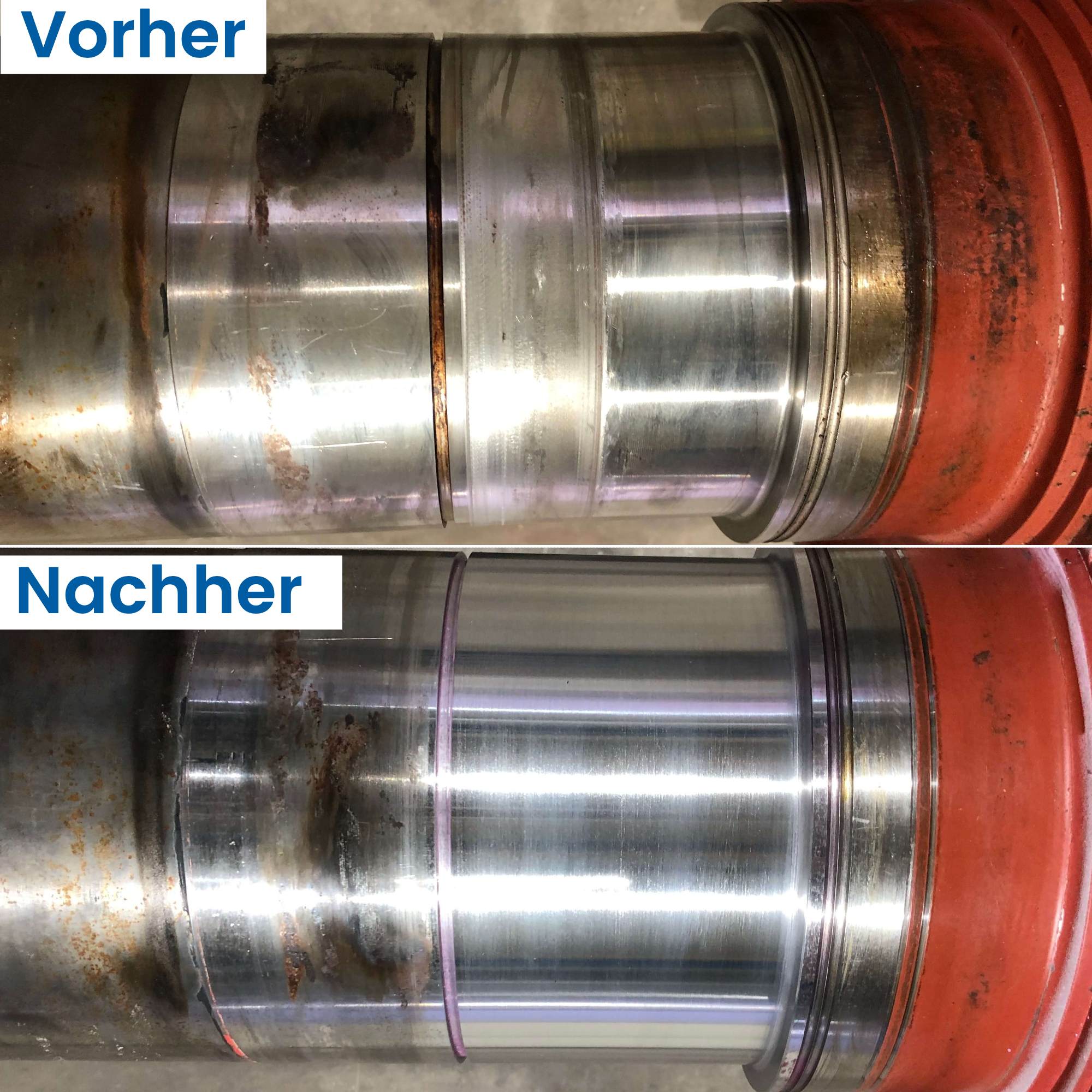
Shafts lose their dimensional accuracy due to wear or fitting errors, which leads to increased frictional resistance and downtimes. Laser cladding is used to repair damaged areas precisely and without thermal deformation.
Typical applications: Repair drive shafts, bearing journals, fits and bearing seats.
Advantages:
- Repair possible directly on the component
- No removal necessary for large shafts (Mobile deposition welding)
- High surface quality for sliding and sealing surfaces
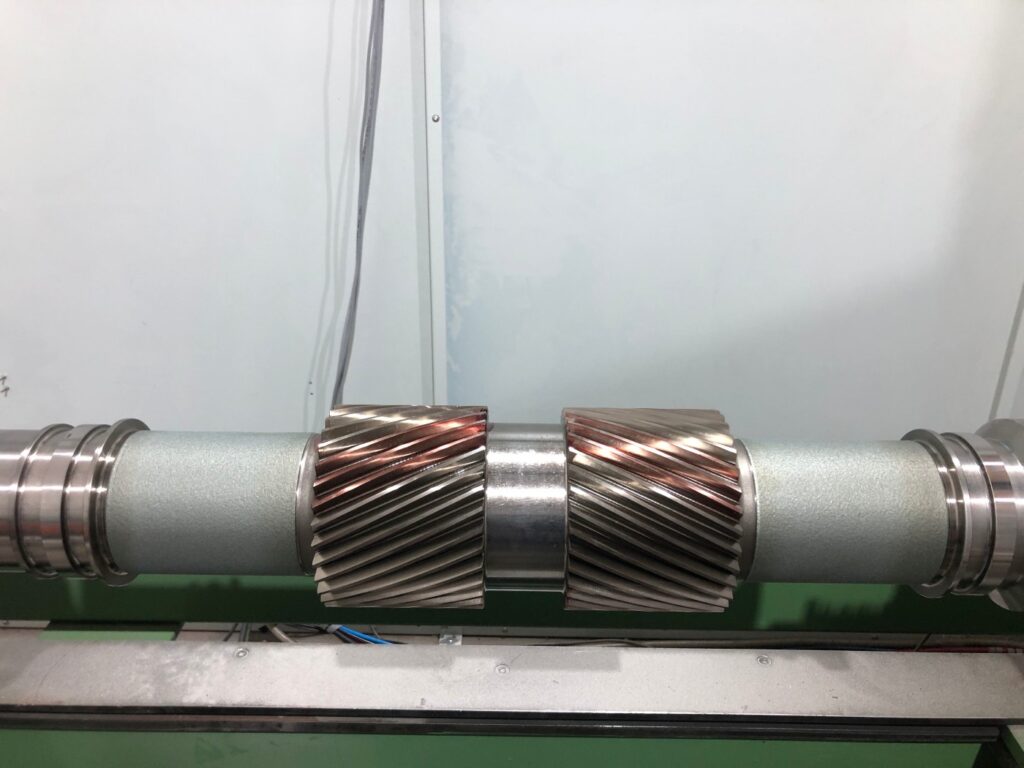
Laser cladding for rollers & cylinders
Surface damage, corrosion or material wear often lead to production downtimes. Laser cladding makes it possible to restore the surface with precisely defined hardness and friction values, often better than the original condition.
Typical applications: Repair cooling, coating and press rolls, calender rolls and cylinders in paper and steel mills.
Advantages:
- Wear protection for rollers - extend roller cycles
- Restoration of the surface structure
- Material and hardness customisation through material selection
- Extended service life, lower spare parts costs
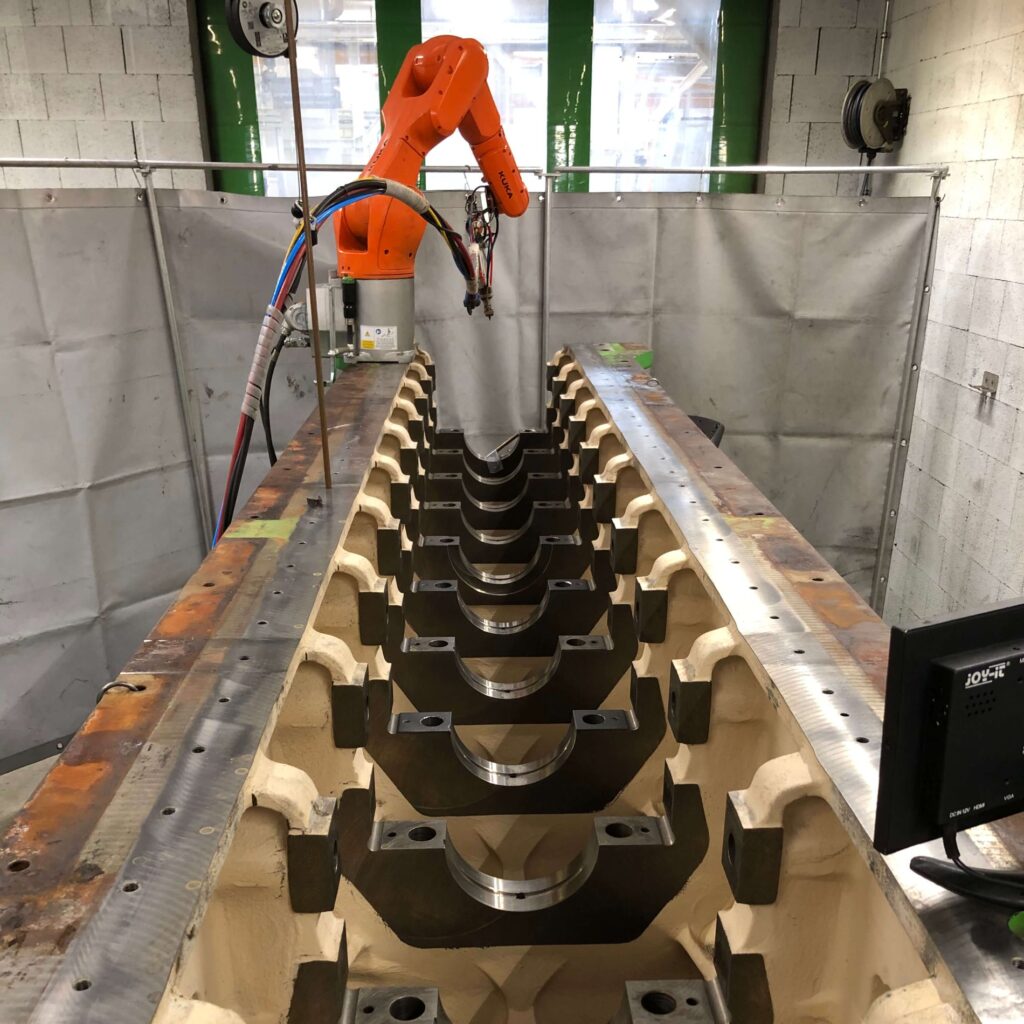
Laser cladding for pumps & housings
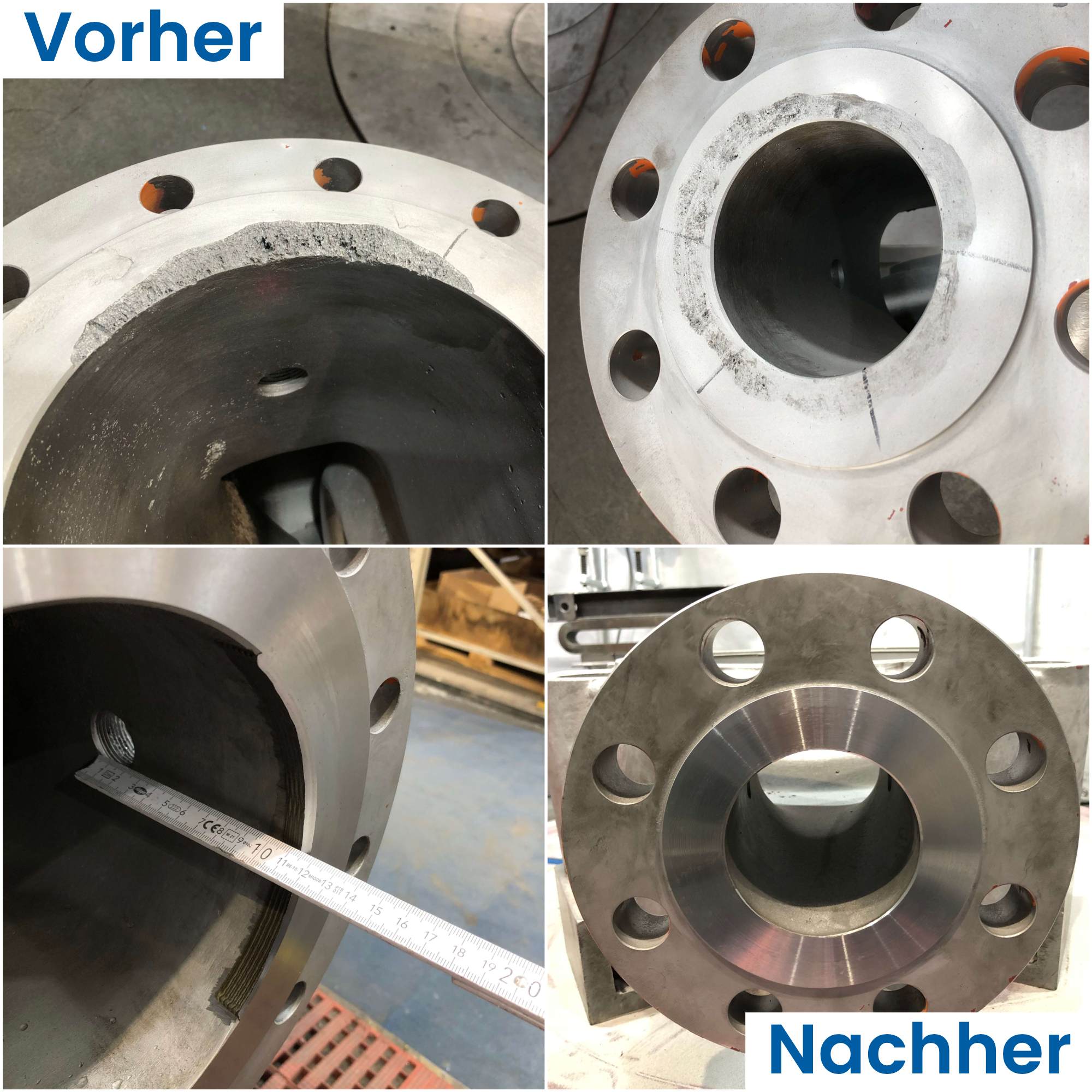
Corrosion is a constant issue, especially in the chemical and process industries. Laser-based coatings can be used to prevent cavitation and chemical attacks in the long term.
Repair and wear protection are also possible for materials such as aluminium or bronze.
Typical applications: Repair impellers, pump shafts, housings, sealing surfaces and shaft ends.
Advantages:
- Pump repair
- Protection against cavitation, erosion and corrosion
- Precisely fitting repair of sealing and bearing surfaces
- Shorter downtimes thanks to mobile implementation
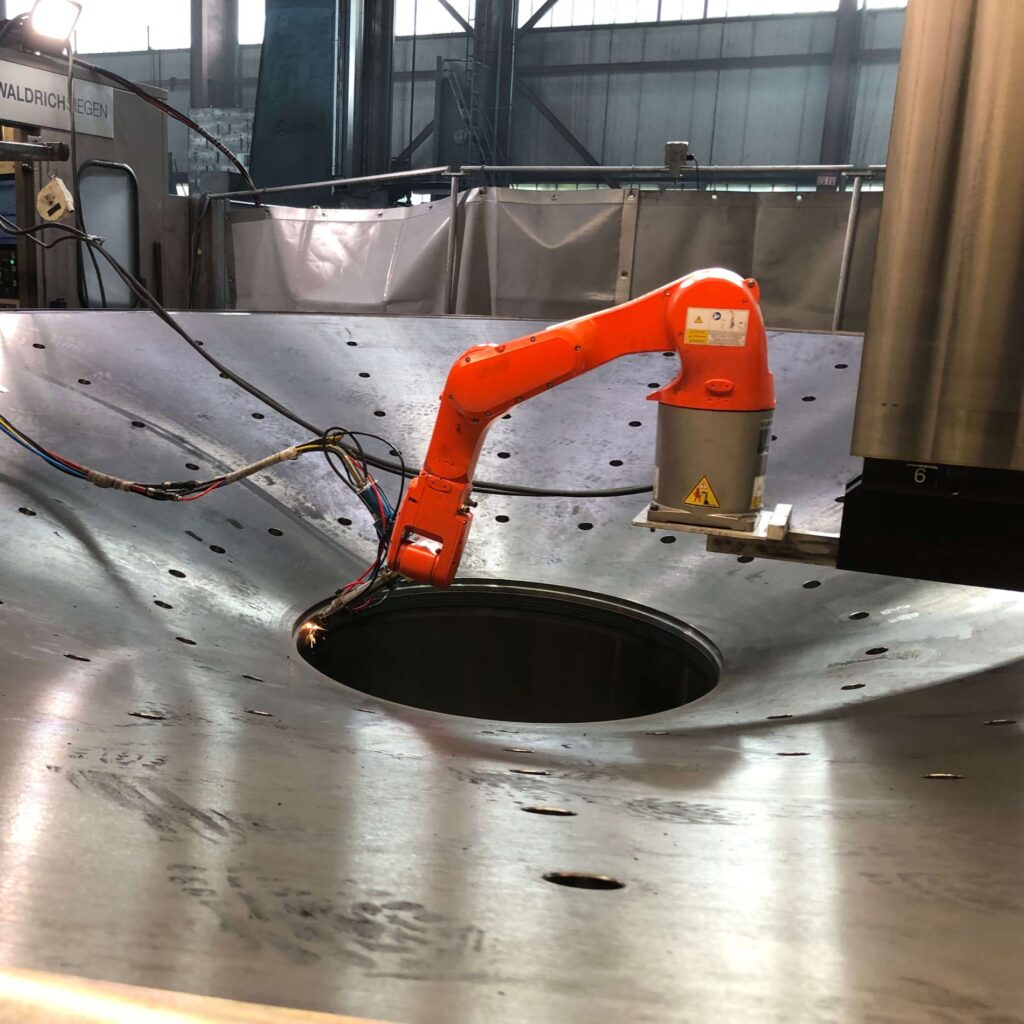
Laser cladding for turbines & generators
Precision and material resistance are crucial for turbines and generators. Laser deposition welding ensures dimensionally accurate repairs without distortion, which is particularly important for rotationally symmetrical components - for example when repairing energy systems.
Typical applications: Repair bearing seats, housing parts, coupling surfaces, rotors, turbines and generators.
Advantages:
- Precise repairs with the highest material quality
- No dismantling required (with mobile process)
- Extending the service life of critical components
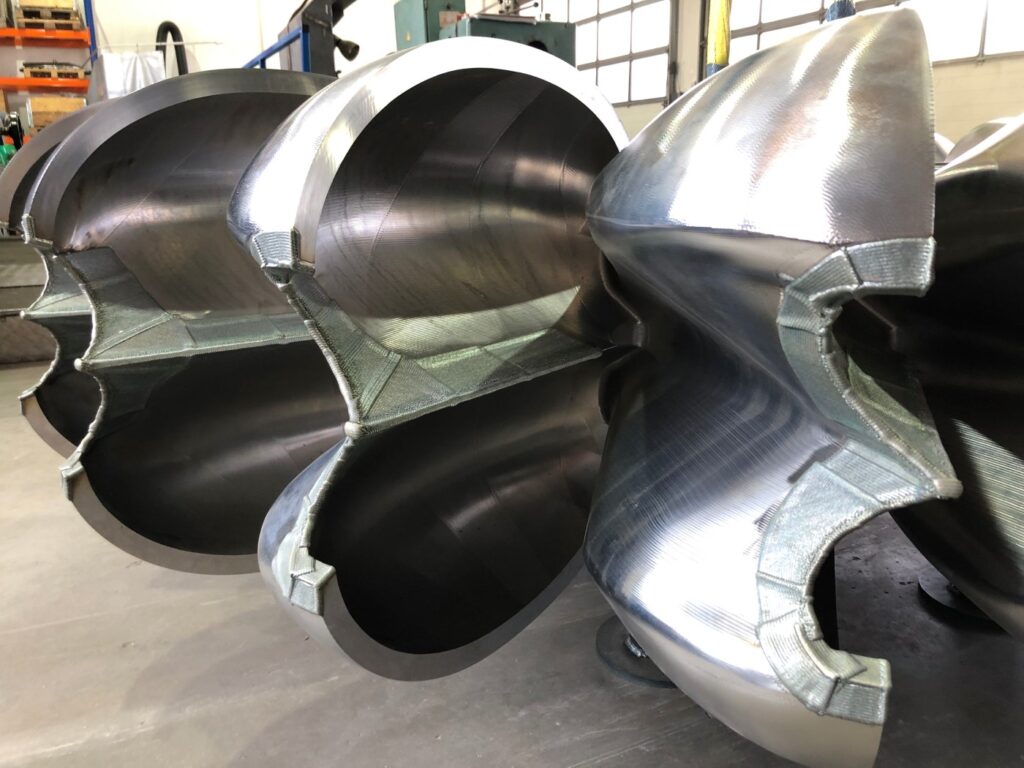
Special applications & paper industry
The process is also used in the paper industry, in the automotive sector and for customised products. The precise laser technology can also be used to coat sensitive or thin-walled parts without changing the material structure.
Typical applications: Repair gears, brake discs, tools, aluminium components and presses.
Advantages:
- Repair of special parts and small series
- Local order without structural change
- Additive manufacturing of wear protection coatings
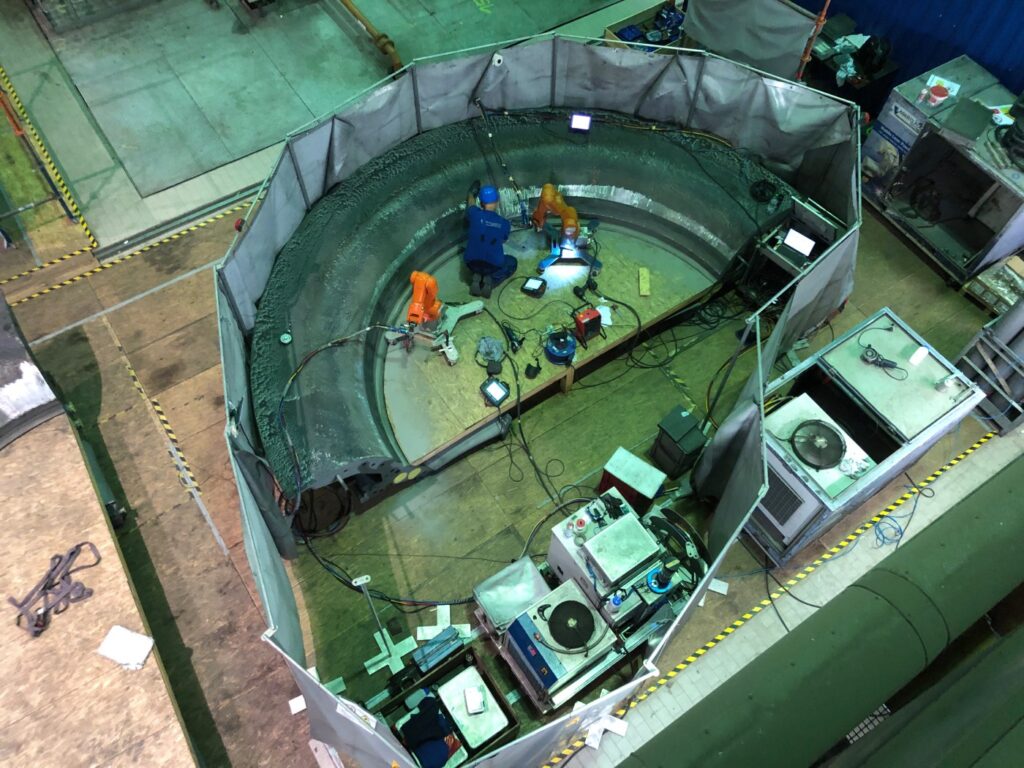
Laser cladding in practice:
Experience, precision and quality
Every project at LaserCladding Austria follows a clear objective: cost-efficient repair with maximum quality and minimum downtime.
As part of the international LaserCladding Group, we have decades of experience in the additive repair of metallic components. Why you can count on us:
Standardised and tested processes
Complete component repair from a single source - ready to install
Mobile plant equipment for Europe-wide deployment
Specialised personnel with extensive experience in industrial maintenance
Industrial maintenance or reconditioning
enquire now
Would you like to know whether your component can be repaired?
We check feasibility, cost-effectiveness and execution - quickly and without obligation.
FAQs on the use of laser powder cladding
For which components is laser metal deposition particularly suitable?
Laser cladding is suitable for metallic components: As a repair process for damage to critical areas or as a finishing process for localised wear or corrosion protection. Typical components are all types of shafts and housings from machines and systems, pumps, motors, generators, turbines, chemical apparatus, etc.
When is repair by laser metal deposition worthwhile compared to new production?
Whenever the original component is expensive, difficult or hard to obtain.
Laser cladding allows damaged surfaces to be repaired in a targeted manner, saving time, material and costs. The process is particularly economical for large components or systems with short maintenance windows.
Which materials can be processed with laser metal deposition?
Typical materials are steel, Cr-Ni steel, cast iron, aluminium and bronze. Depending on the requirements, different powder alloys are used as filler materials.
Can laser metal deposition be carried out directly on site?
Yes, LaserCladding Austria has mobile system equipment that can be used flexibly. This enables repairs to be carried out directly at the customer's premises, without transport or dismantling - ideal for large components.
What is the adhesive strength of laser clad coatings?
Compared to thermally sprayed coatings, laser cladding creates a metallurgical welded joint with the base material. This means that "flaking" does not occur with laser clad coatings.
Which industries particularly benefit from laser metal deposition?
The laser cladding process is particularly relevant for:
- Mechanical and plant engineering
- Energy and power plant industry
- Chemicals and process industry
- Paper industry
- Marine and rail vehicle technology
Is laser metal deposition environmentally friendly?
Yes, the process extends the service life of components, reduces raw material consumption and waste - and thus actively contributes to a sustainable circular economy. Instead of producing new parts, existing components are reused.
How quickly can LaserCladding Austria carry out a repair?
Depending on the size of the component and the type of damage, repairs can be carried out within a few days - even directly on site in the case of mobile use. A non-binding check of the component quickly provides clarity about the cost and feasibility.
What advantages does LaserCladding Austria offer over other repair companies?
LaserCladding Austria combines precise laser technology, decades of experience and international quality assurance. As part of the LaserCladding Group, we guarantee maximum process stability, documented results and short response times - both stationary and mobile.
 German
  English